Features
One workflow from books to reports
Work of a CA, auditor or finance team in one Windows desktop application, with AI that answers from the books.
- 225225ready reports
- 128128audit exception rules
- 2121CA tools + 4 document tools
- 88AI personas
Feature groups
Connect
Auto-detect, live or file. Any company, any period.
- Finds accounting software and company data on this PC
- TallyPrime / Tally.ERP 9 live, or the data folder with Tally closed
- BUSY, MARG ERP and EasySol without exporting first
- Two-year trial balance import for any other software
- FY, AY, TY, quarter, month or custom range
Statements & Books
Schedule III, notes, designer and multi-year comparatives.
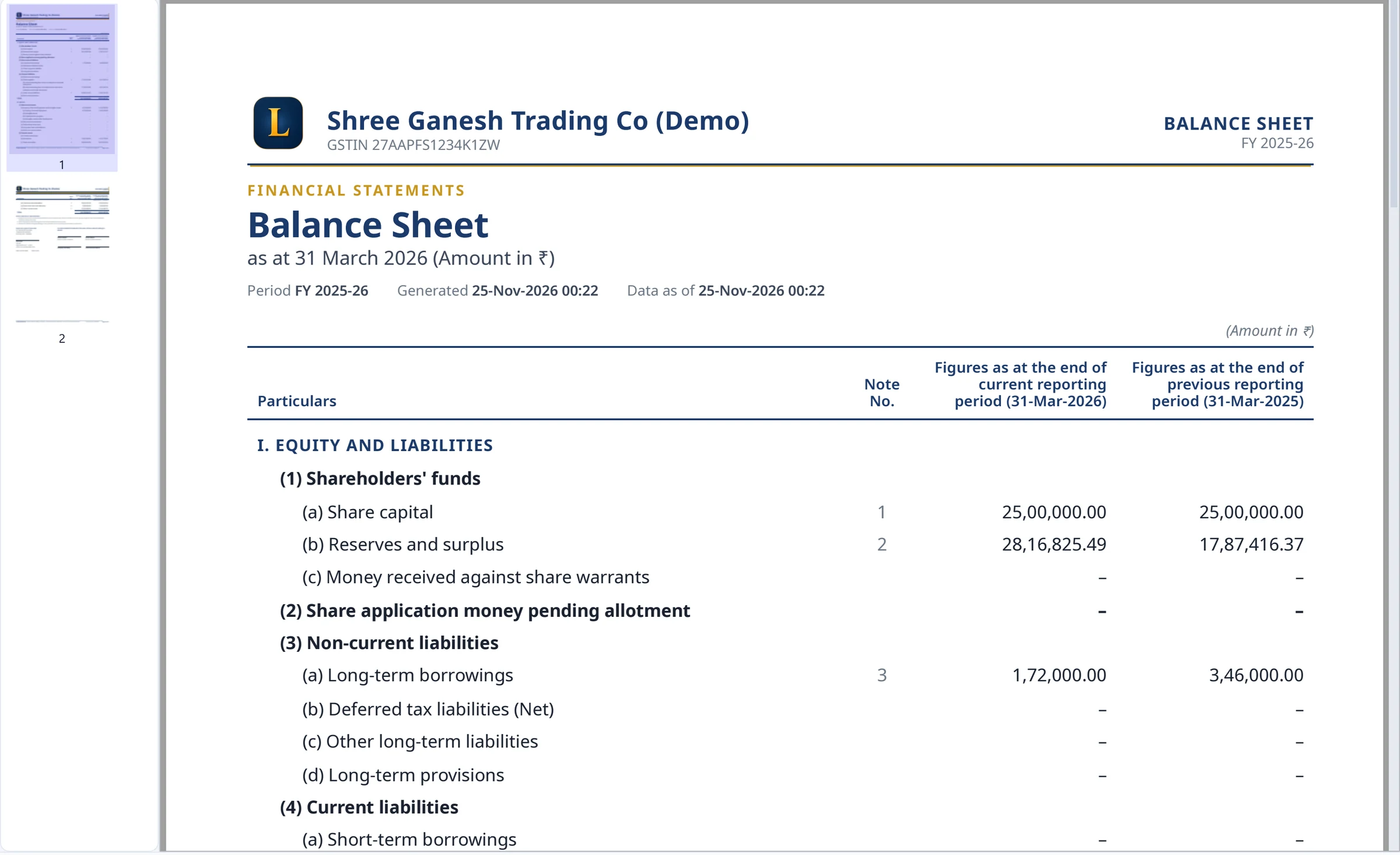
- Schedule III Balance Sheet and P&L with the previous year
- Notes to accounts, ageing, MSME disclosure and ratios
- Cash flow (indirect and direct) and funds flow
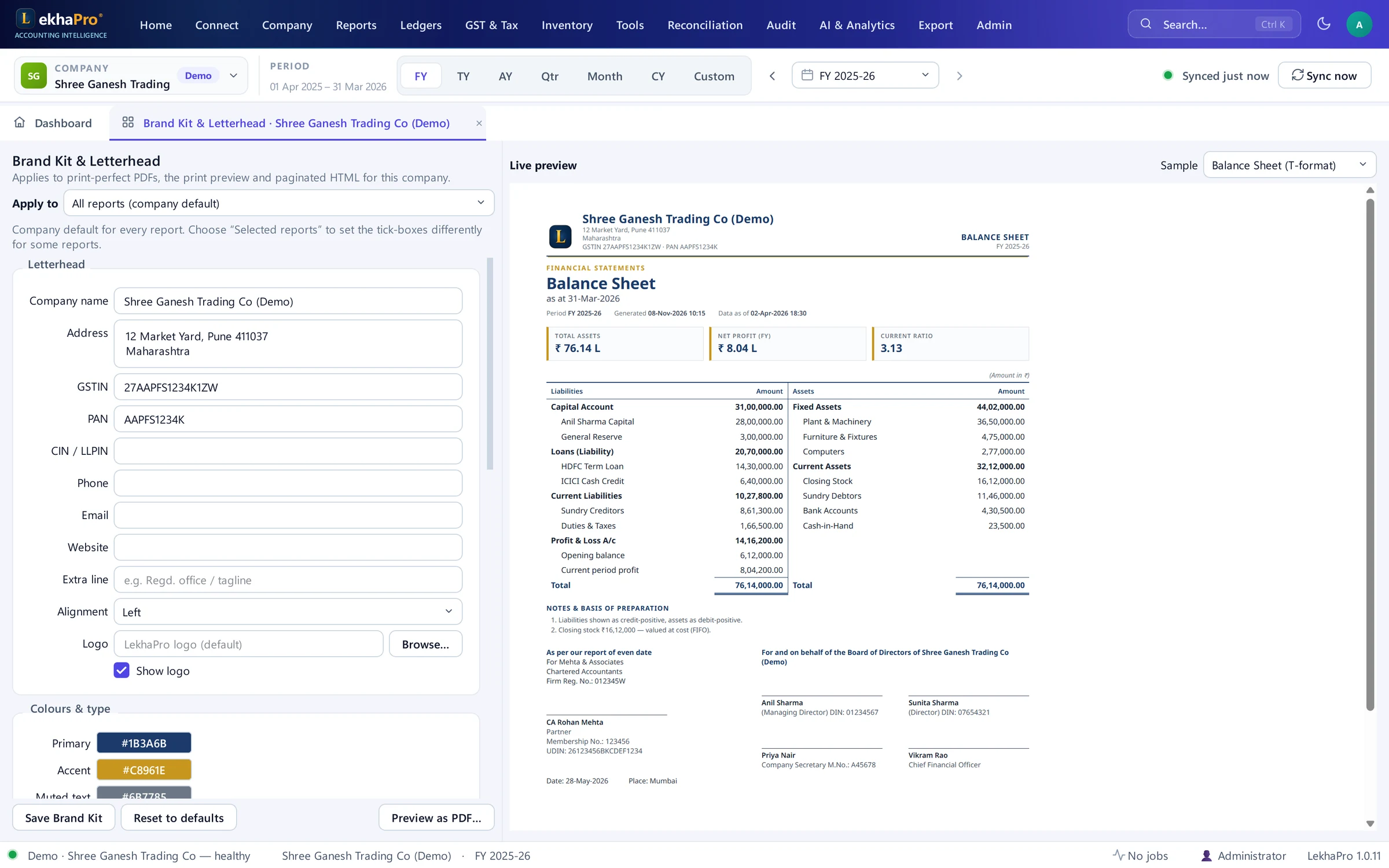
- Schedule III Designer with a live preview per client
- Multi-year analysis: trends, growth and ratios
GST & Portal Files
GSTR-1, 3B, 9, e-invoice, TDS and more, checked first.
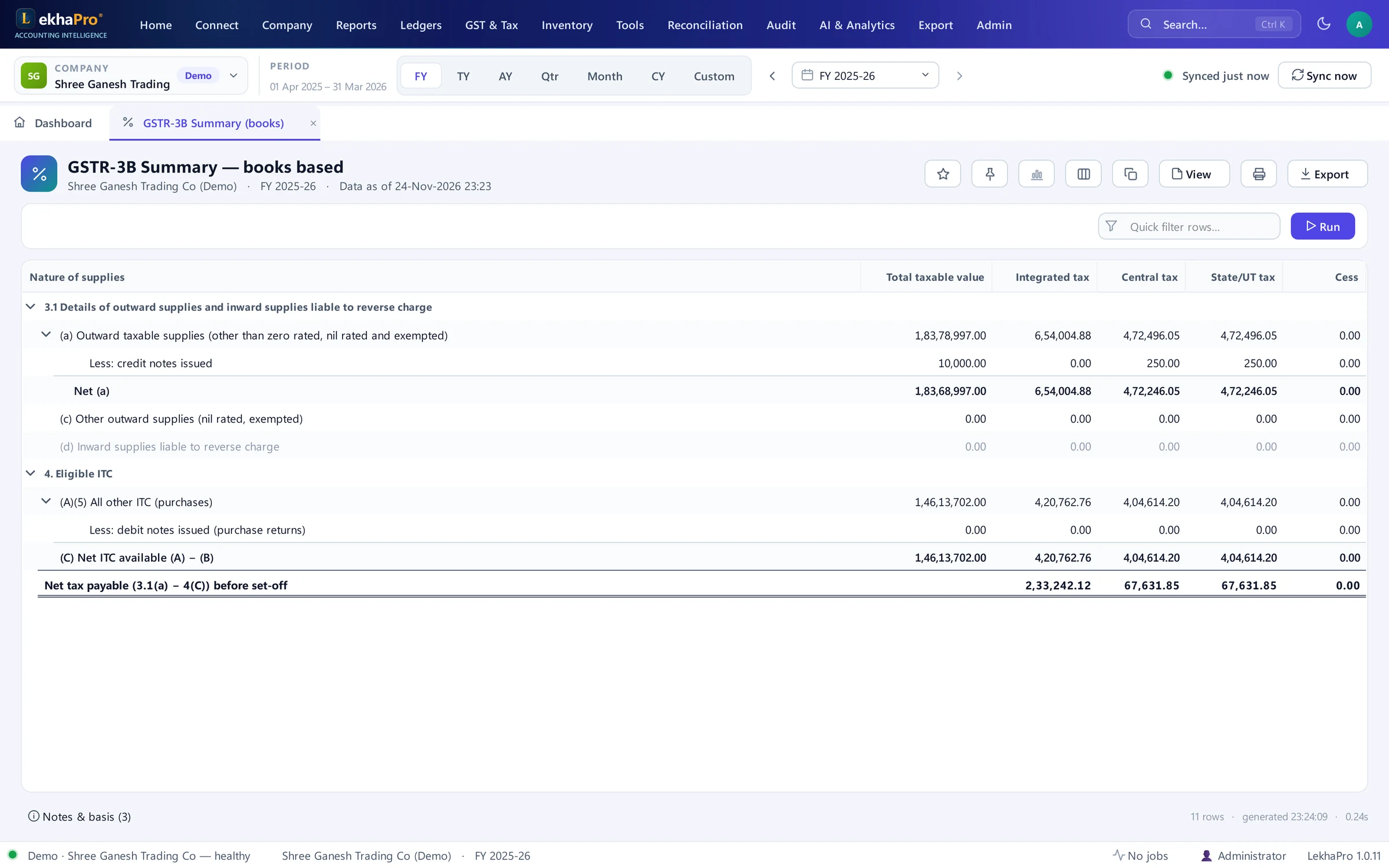
- GSTR-1 portal JSON and Offline Tool Excel, GSTR-3B JSON
- GSTR-9 annual return and 9C worksheet
- E-invoice and e-way bill bulk files
- TDS 26Q / 24Q statement data, Form 3CD clause data, ITR Part A-BS / P&L
- AOC-4 draft, MSME Form-1 and compliance calendar
Reconciliation
Bank, GSTR-2A / 2B, IMS and GSTR-1.
- Bank reconciliation with auto-match and BRS
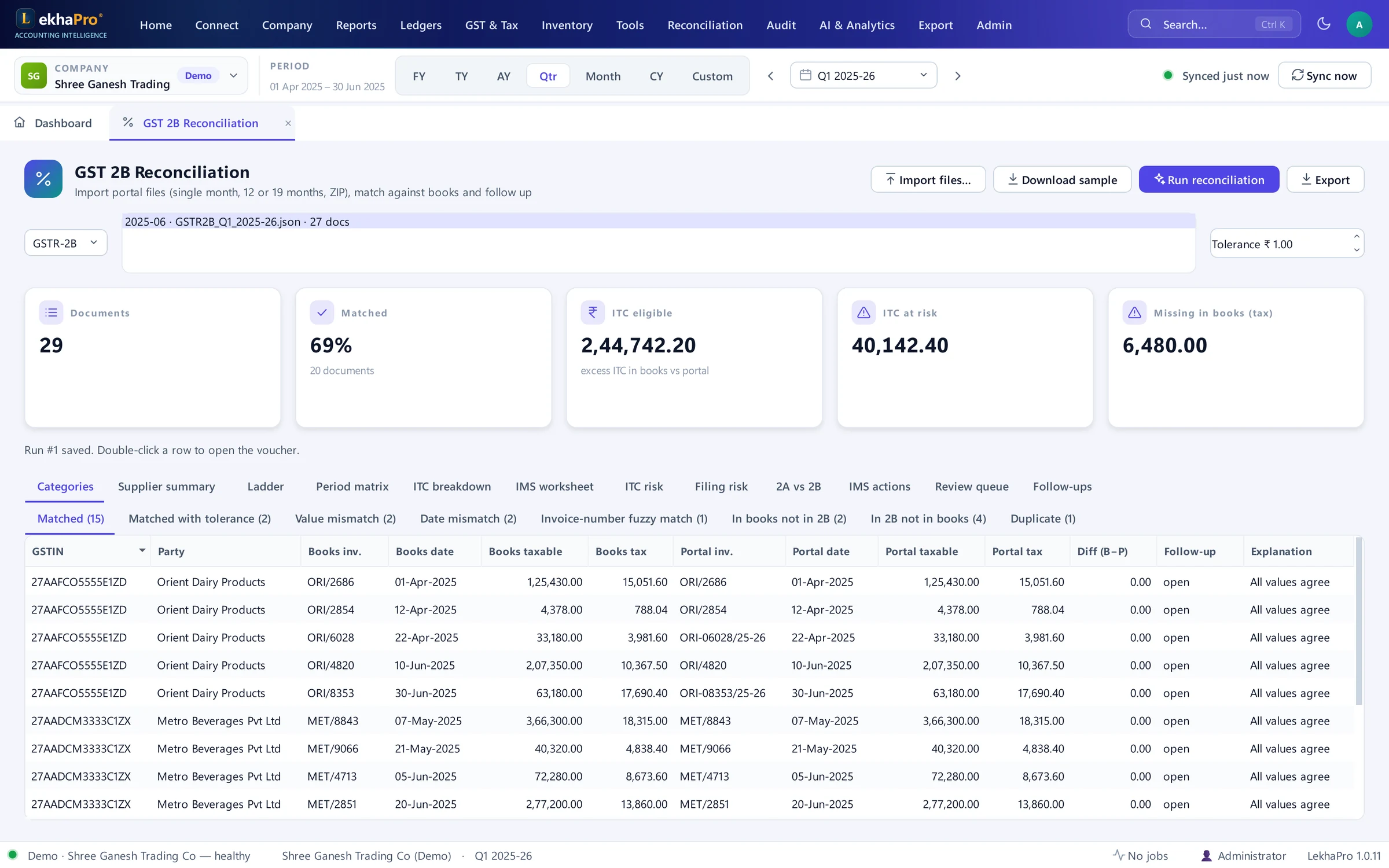
- Books vs GSTR-2B / 2A with fuzzy invoice numbers
- IMS worksheet: accept, reject or pending
- Filed GSTR-1 compared with the sales books
- ITC at risk and supplier follow-up letters
Year-end & Assets
Finalisation entries, fixed asset register and tax.
- Finalisation entries kept outside the source books, maker-checker with two or more users
- Year-end readiness checklist
- Fixed Asset Register reconciled to the ledger
- Companies Act and Income-tax depreciation
- Salary tax (old vs new regime), budgets and forecast
Audit
128 exception rules, sampling, CARO and engagements.
- Exception Library of 128 rules, tuned per company
- 40A(3), 269ST, duplicates, back-dated entries, Benford
- Sampling rules (SA 530) and differences (SA 450)
- CARO 2020 builder and observations register
- Anomaly Centre ranks unusual transactions
Documents & OCR
Bills to voucher drafts, read on your own PC.
- Offline OCR for invoices, bills and receipts
- GSTIN, invoice number, date, value and tax extracted
- Confidence score and position on the page
- Duplicate-bill check before booking
- Approved drafts to Tally XML or Excel
AI & Analytics
Ask your accounts, forecasts, MIS and Report Studio.
- Answers from the company's own books, with sources
- Eight personas, with full effect when online AI is on
- Daily briefing, forecasts and what-if scenarios
- Pivot tables and charts in Report Studio
- Built-in AI on your PC; online AI is optional and needs your consent and API key
CA Tools
21 CA tools + 4 document tools.
- PDF toolkit and PDF editor
- Interest, late-fee and capital gains calculators
- 26AS / AIS and GSTR-2B matchers
- Notices, UDIN, DSC and fee billing registers
- Certificates, letters and agreement summaries
Reports
225 ready reports
No report to design and no template to set up. Pick the company and period and open any report.
23 reports in Inventory
Inventory 23
Stock Summary
Item-wise opening, inward, outward and closing quantity and value (weighted average).
Item Ledger (Stock Item Vouchers)
Movements of one stock item with running quantity.
Stock Ageing (FIFO)
Closing stock split by age of inward lots (FIFO): 0-30, 31-60, 61-90, 91-180, >180 days.
Stock Movement Analysis
Fast / slow / non-moving classification by days since last outward movement and turnover.
Slow / Non-moving Stock
Items in stock with no outward movement for N days.
Dead Stock
Items in stock with no sale in the last N days (default 180).
Stock Below Reorder Level
Items whose stock on hand at period end is below the reorder level, with shortfall, average daily sale and suggested order quantity (falls back to days-of-cover when no reorder levels).
Negative Stock
Items whose running quantity went below zero, with first date and lowest balance.
Item-wise Gross Profit
Sales value vs cost (weighted-average) and GP% by item, item group, customer or invoice; flags sales below cost.
Top Selling Items
Items ranked by sales value with share and cumulative %.
Sales & Returns (Net) — Item-wise
Item-wise sales and sales returns (credit notes) quantity and value, net and return %.
Godown-wise Stock
Closing quantity by godown / location.
Batch & Expiry Stock
Batch-wise closing quantity with expiry: near-expiry (≤ N days), expired, and value at risk (only when batch / expiry data exists).
Stock & Sales Statement
Quarterly item panels: opening, purchases, sales and closing quantity/value (bank stock statement).
Purchase Rate History
Item-wise purchase rates over time: last, min, max, average and supplier of the last purchase.
Discount Analysis
Discount given (or received) by item, party or item group: bills, quantity, gross value, discount and discount % — from line discounts, else discount ledgers in the invoices.
Free Goods Issued
Free / scheme quantity given with invoices: zero-value lines, or quantity above the billed value (qty × rate exceeds the line amount) — valued at the average billed rate.
Purchase Planner (Stock Cover / Stock-out Forecast)
Days of cover and forecast stock-out date per item from the average daily sale, with a suggested order quantity (cover days, reorder level, minimum order qty) and estimated PO value.
Pending Purchase / Sales Orders
Open order lines as on the period end: ordered vs received / delivered (FIFO by party + item), balance, due date, value and status (from order vouchers).
Batch-wise Stock Valuation
Closing stock by godown, item and batch with expiry, cost (weighted average) and sale value at the last selling rate.
Expiry Register (Buckets)
Batches in stock by time to expiry: Expired, ≤3 months, 3-6, 6-12 and > 12 months, with godown, quantity and value at cost.
Inventory Ageing by Group / HSN / Vendor
FIFO ageing of closing stock rolled up by item group, HSN or supplier of the inward lot, with idle days.
Stock by Stage (RM / WIP / FG)
Opening, inward, outward and closing stock by stage — raw material, WIP, semi-finished, finished, stores & spares, packing, traded — from stock-group names (overridable).
Integrations
Works with the books you already keep
No migration. Your source books are never changed unless you approve a posting to Tally.
TallyPrime / Tally.ERP 9
Live or data folderReads a running Tally, or the company folder with Tally closed. Posts back only vouchers you approve after a preview.
BUSY
DirectReads a copy of BUSY data files: masters, vouchers and inventory.
MARG ERP
DirectReads the MARG data folder: masters, vouchers and stock.
EasySol
DirectReads accounting and inventory data from SQL Server or Access.
Excel / CSV / ODS / XML / JSON
File importTrial balance, day book or ledger export. Columns are mapped automatically and the mapping is saved.
Trial Balance import
Two-yearFor any other software: load current and previous year and go straight to reports.
Product names belong to their owners and are used only to say what LekhaPro can read.
Screens
Real screens, sample data
Click the screen in the laptop to see it in full size.
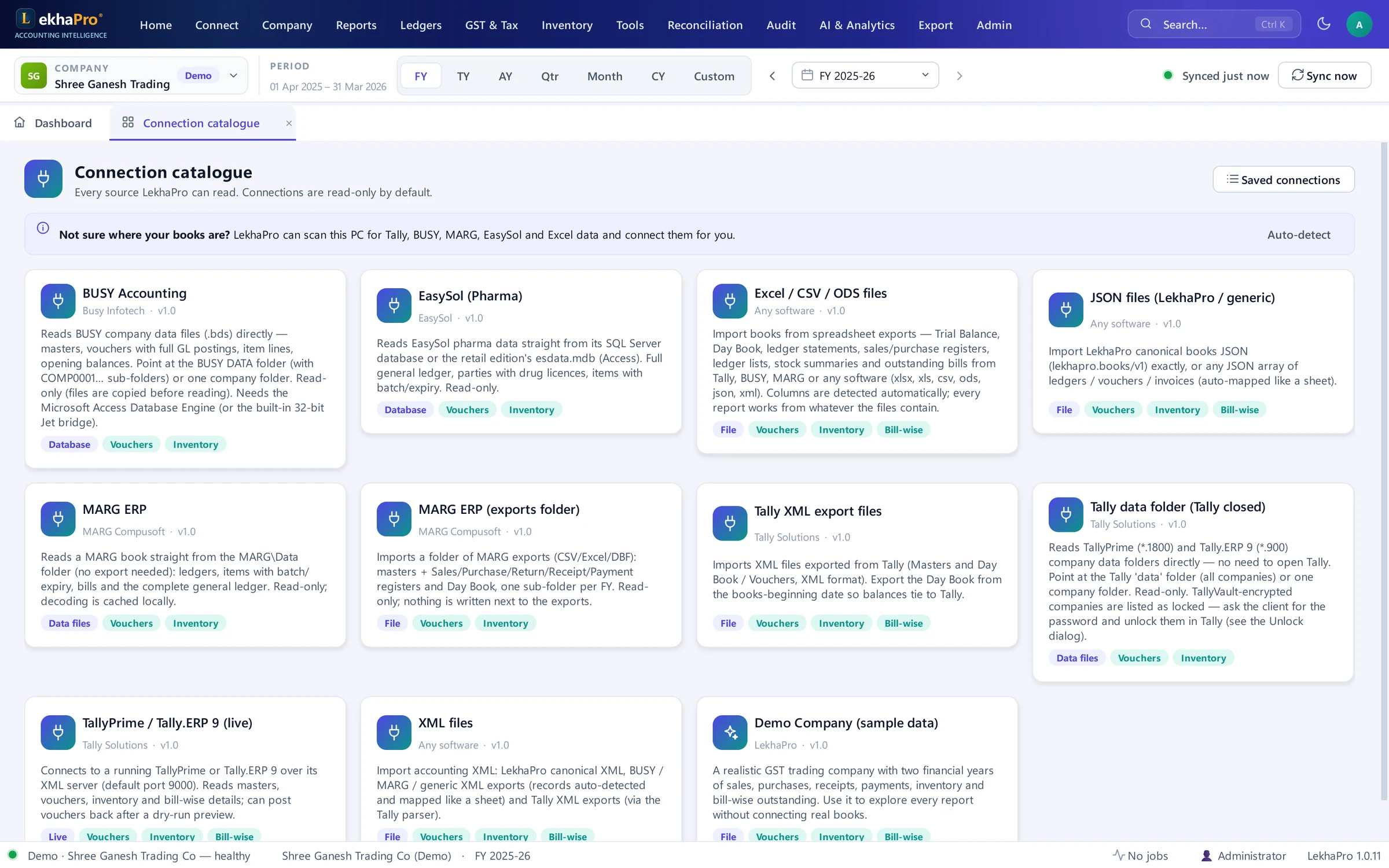
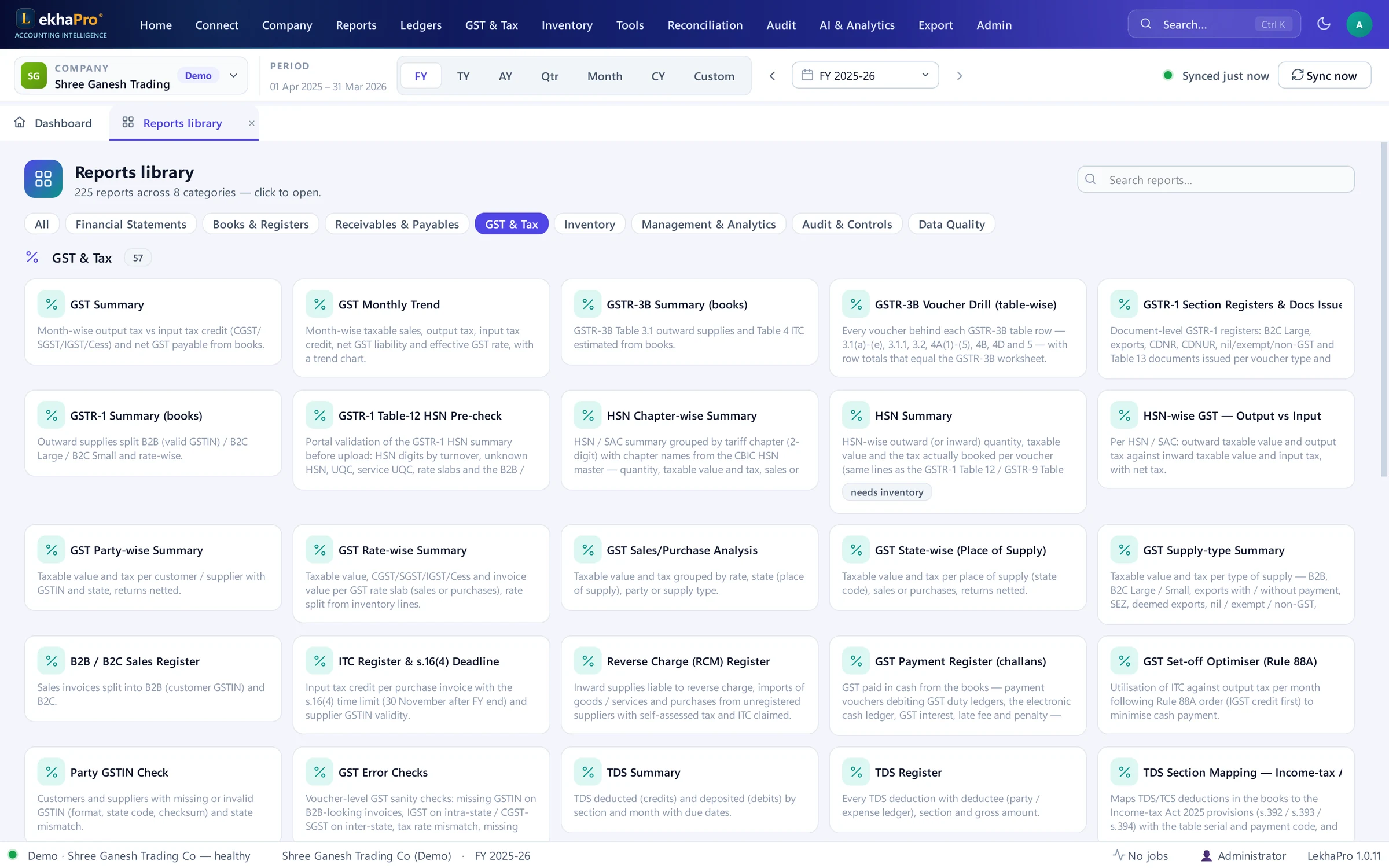
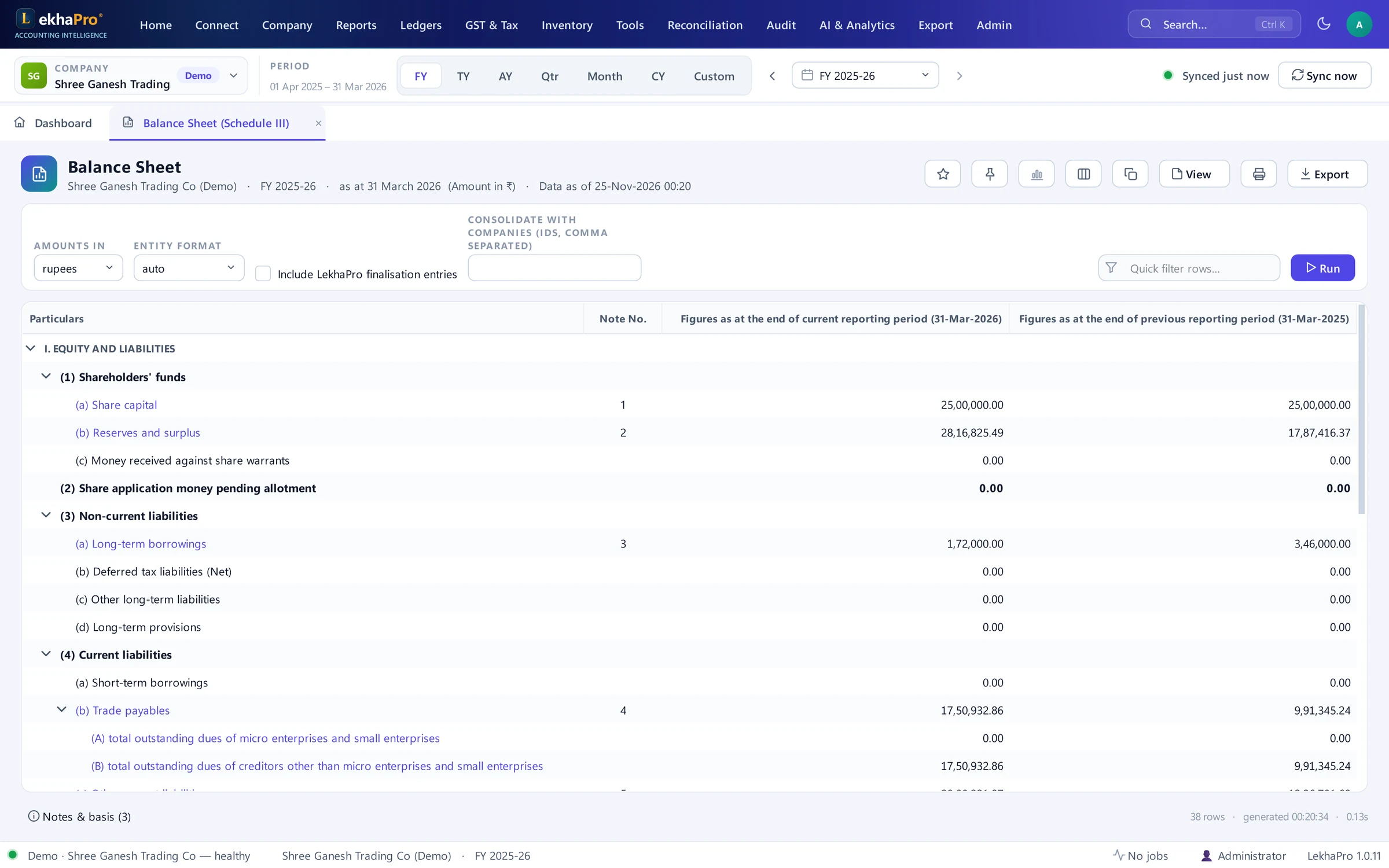
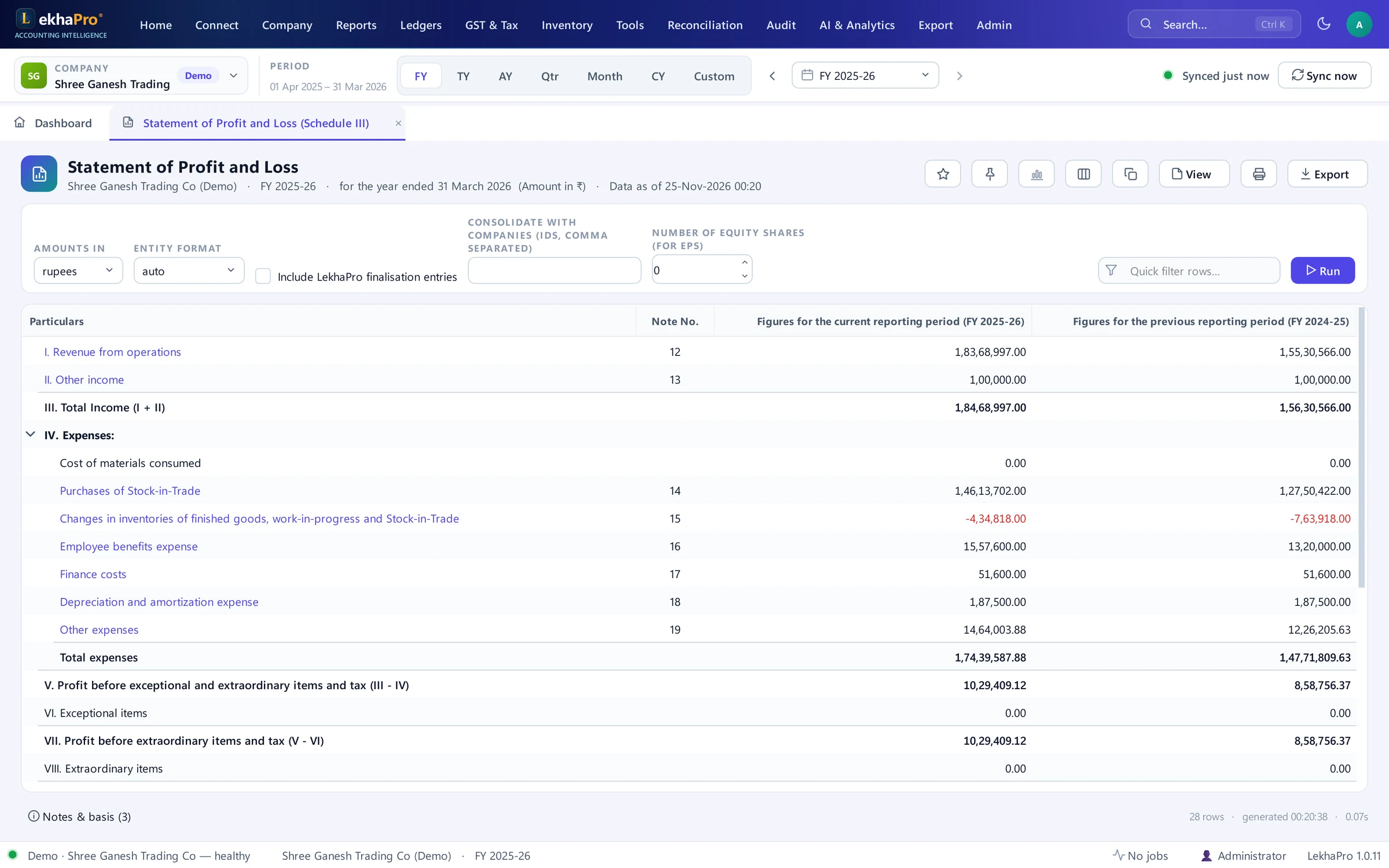
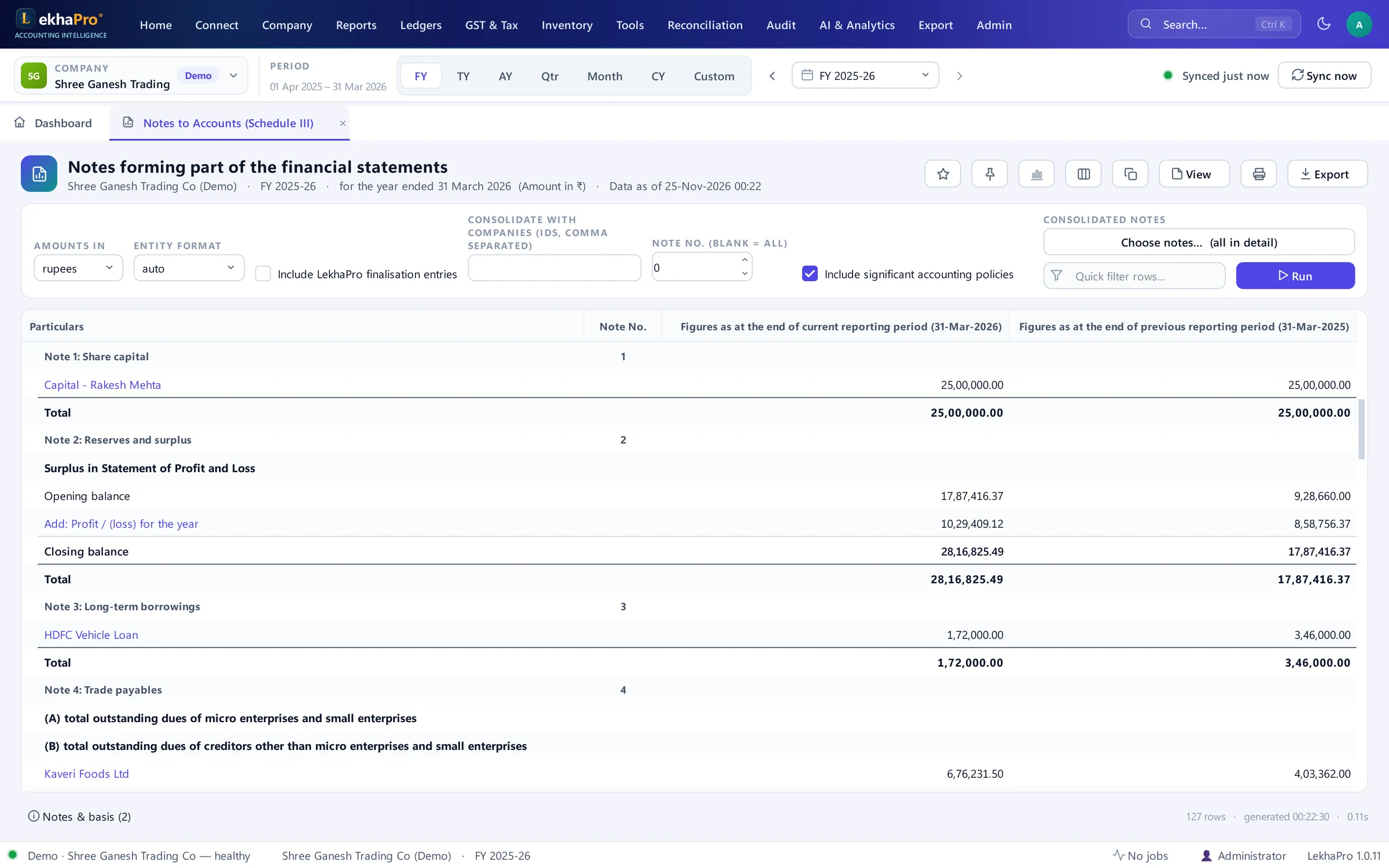
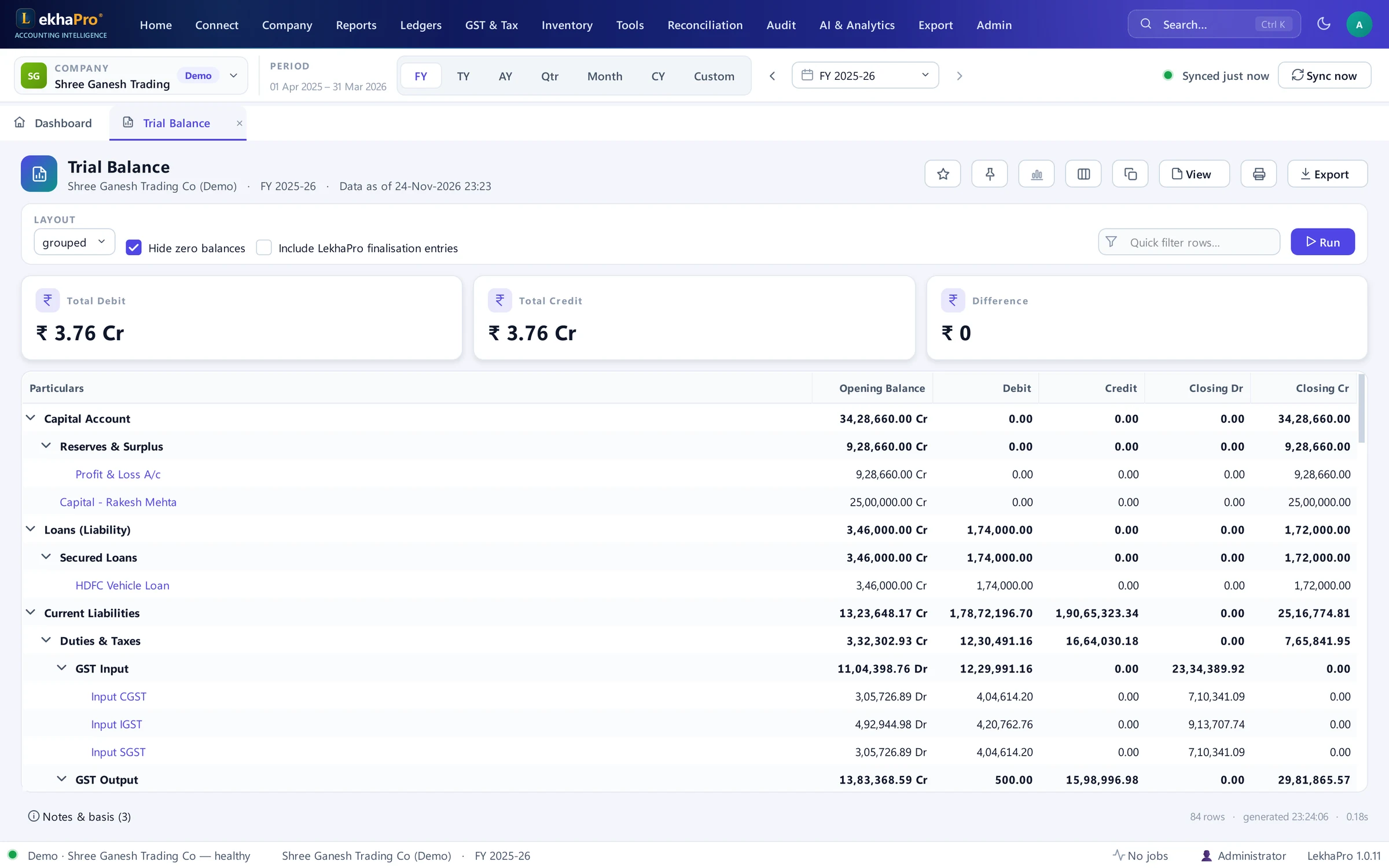
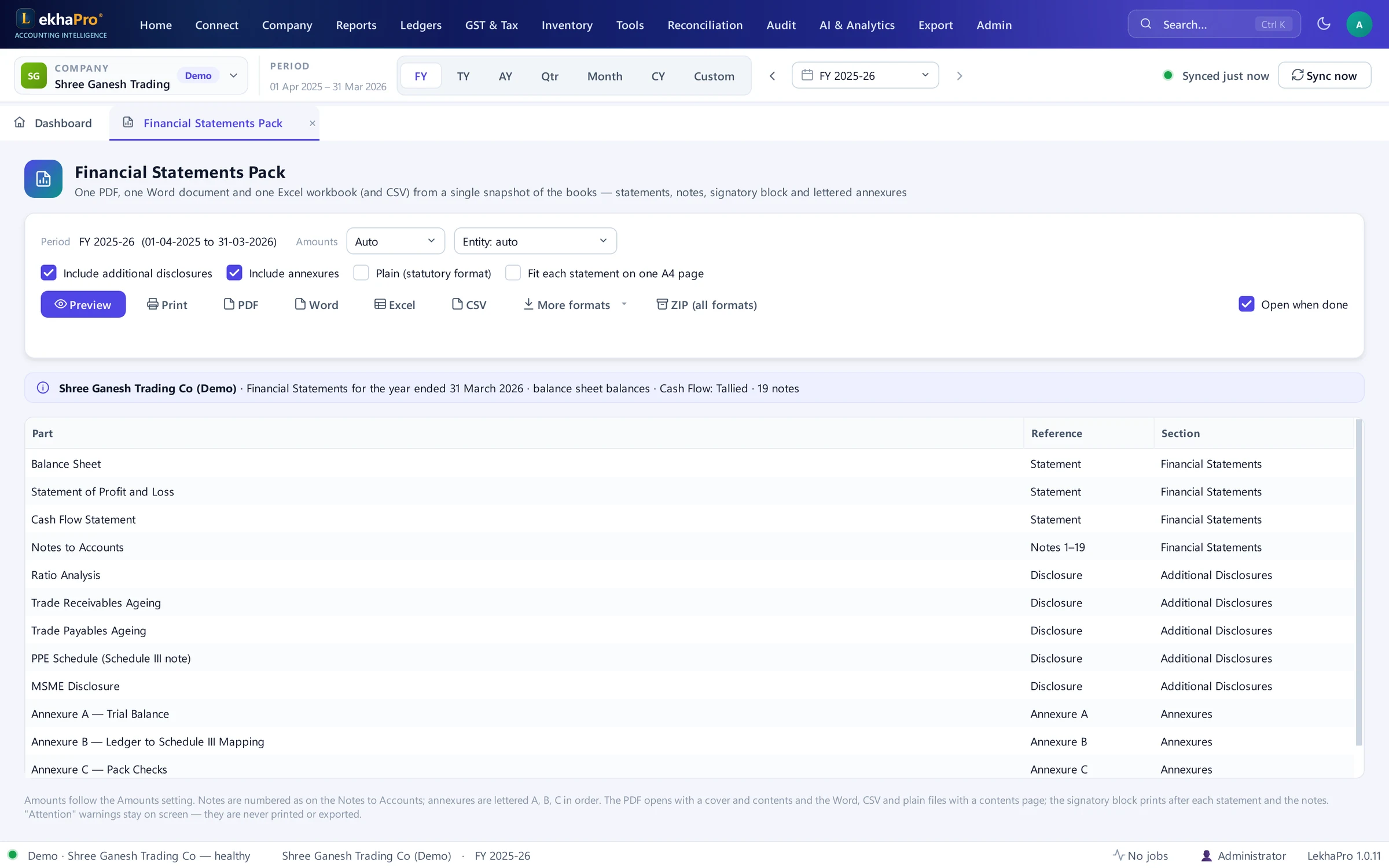
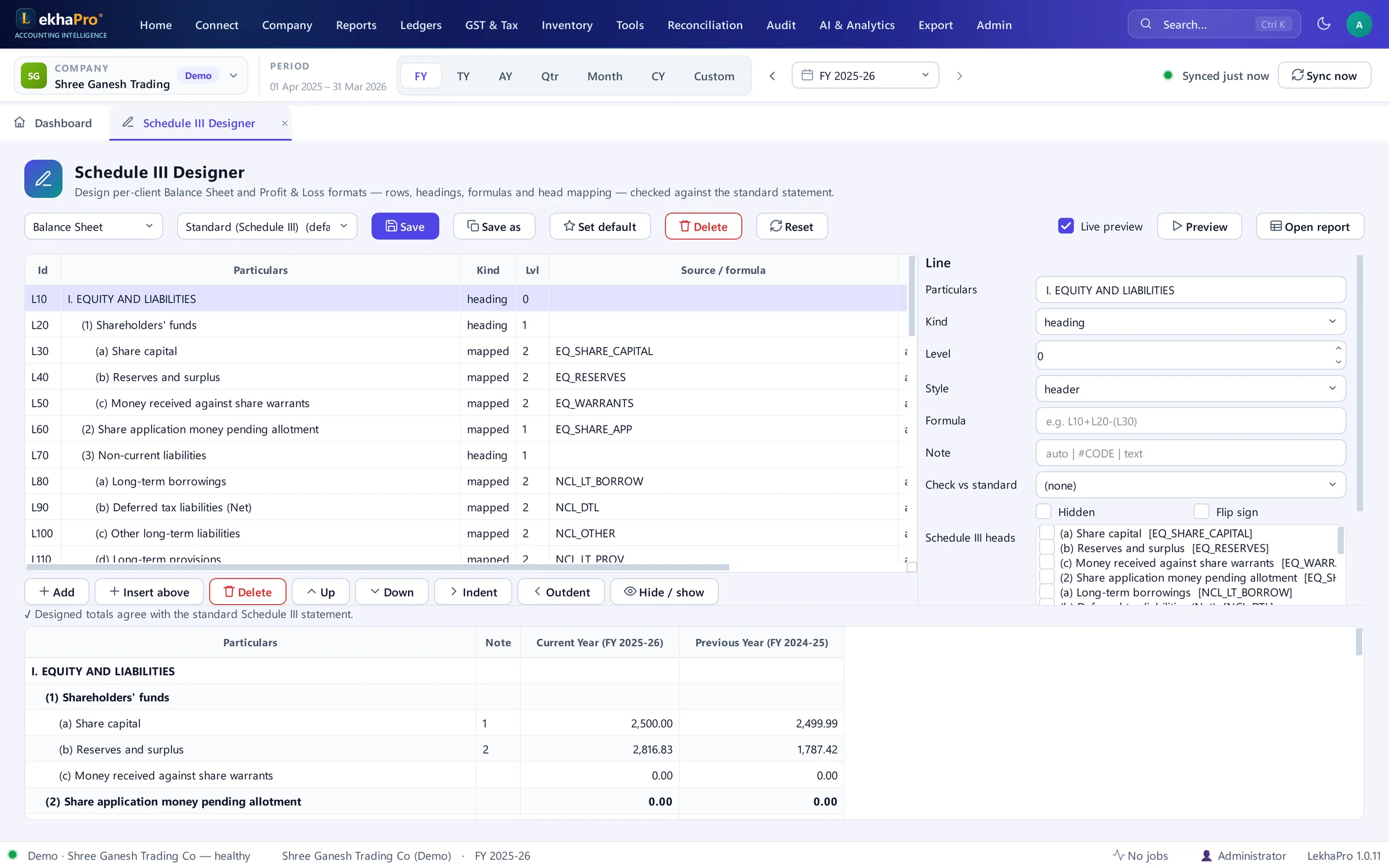
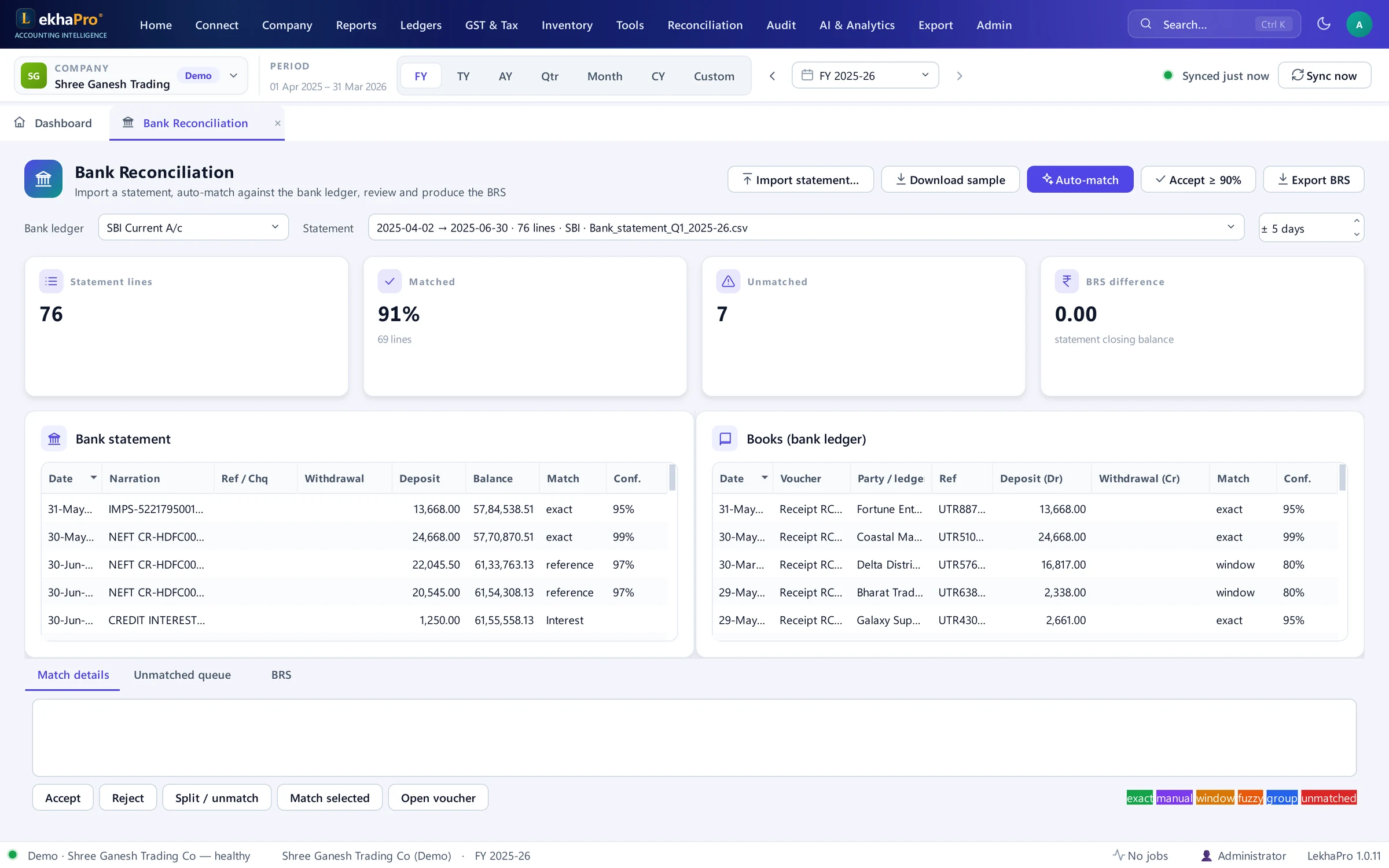
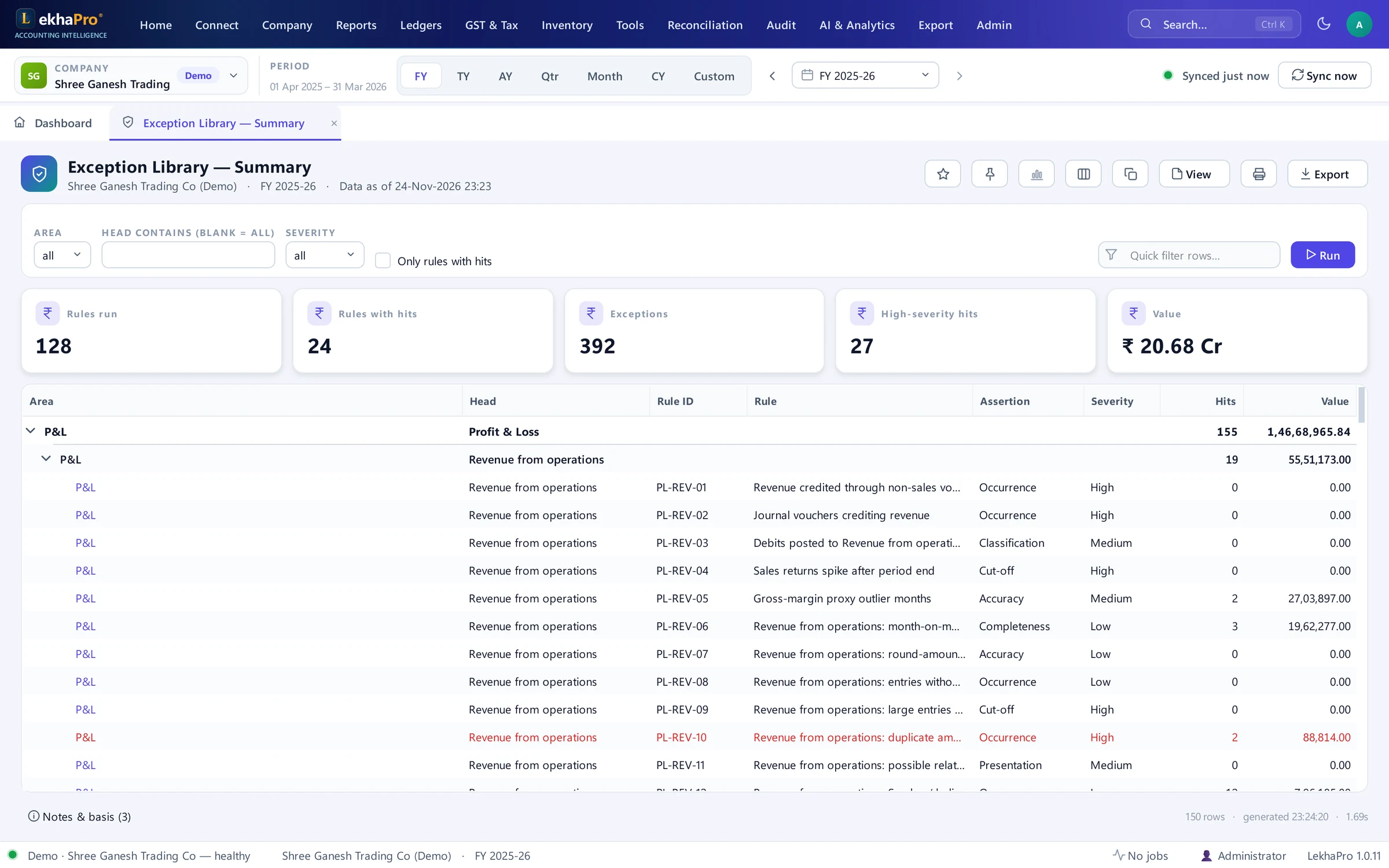
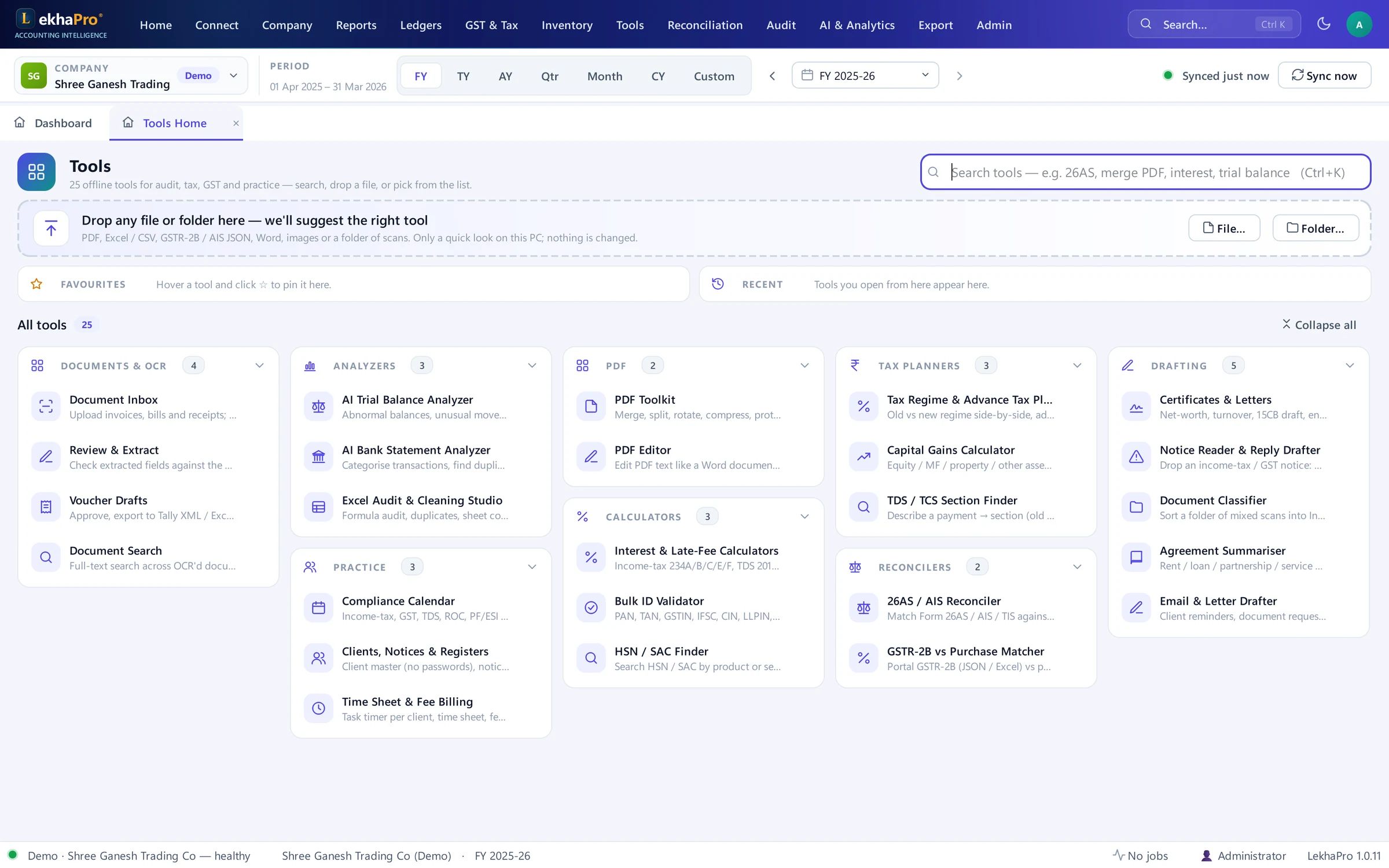
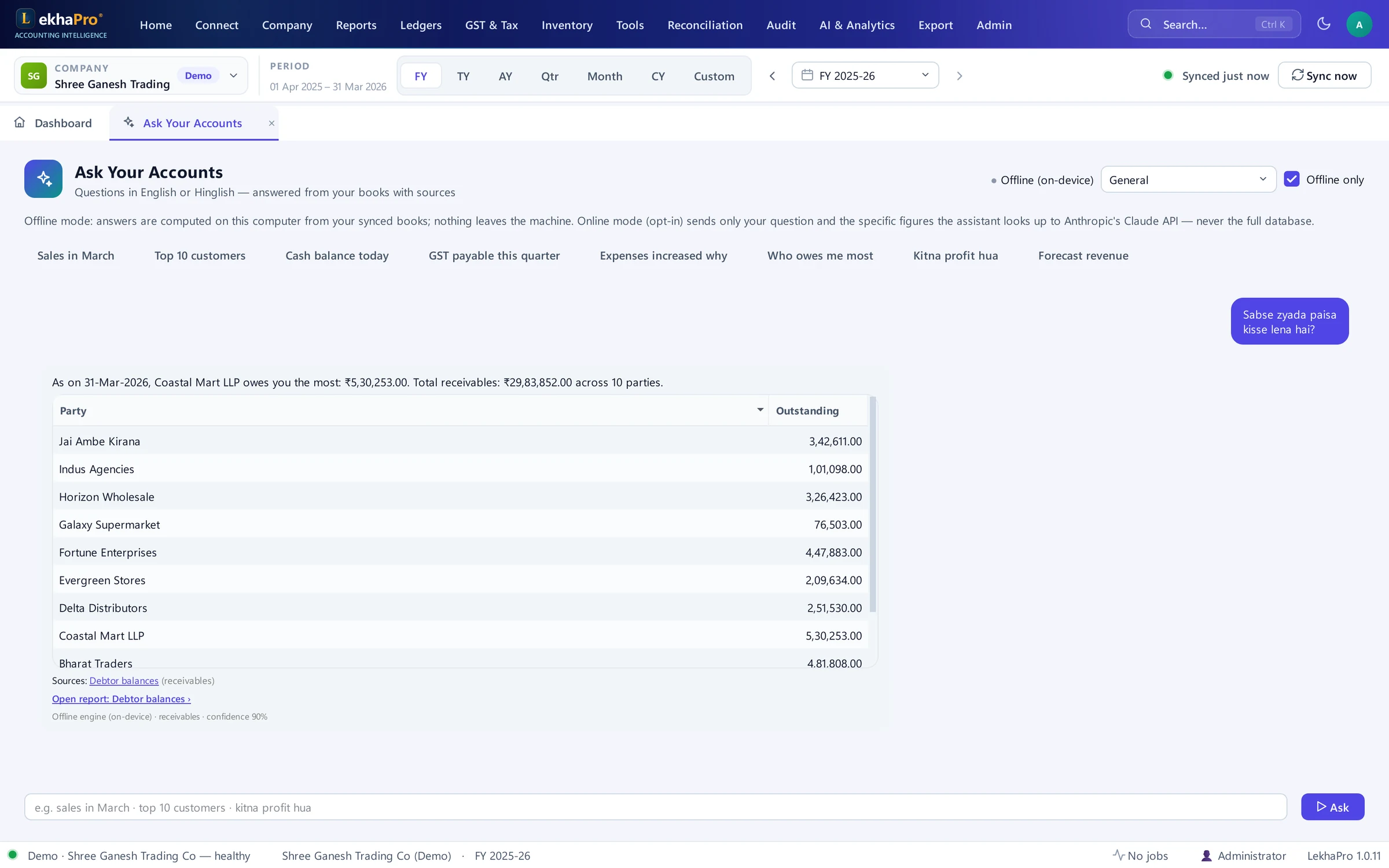
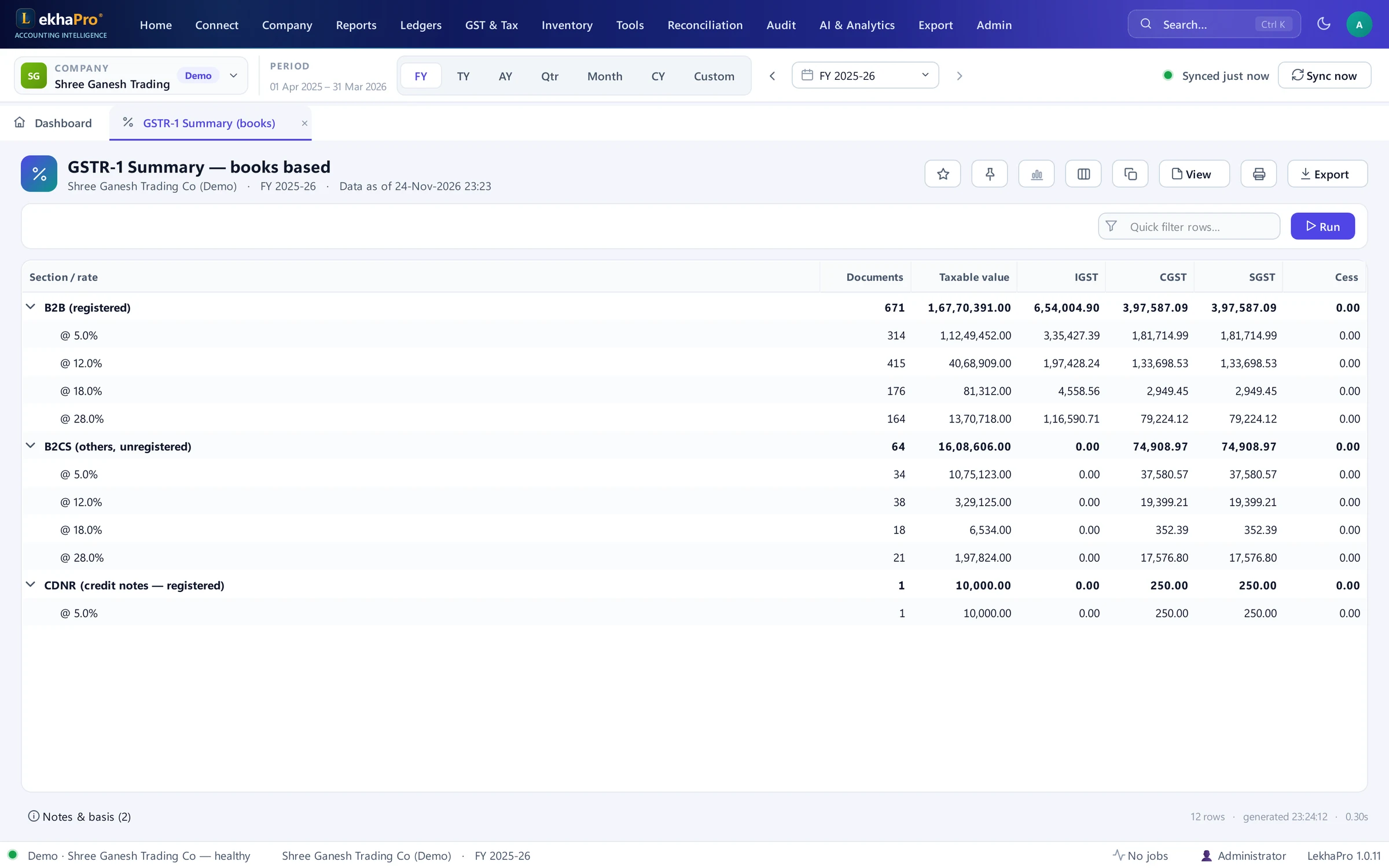
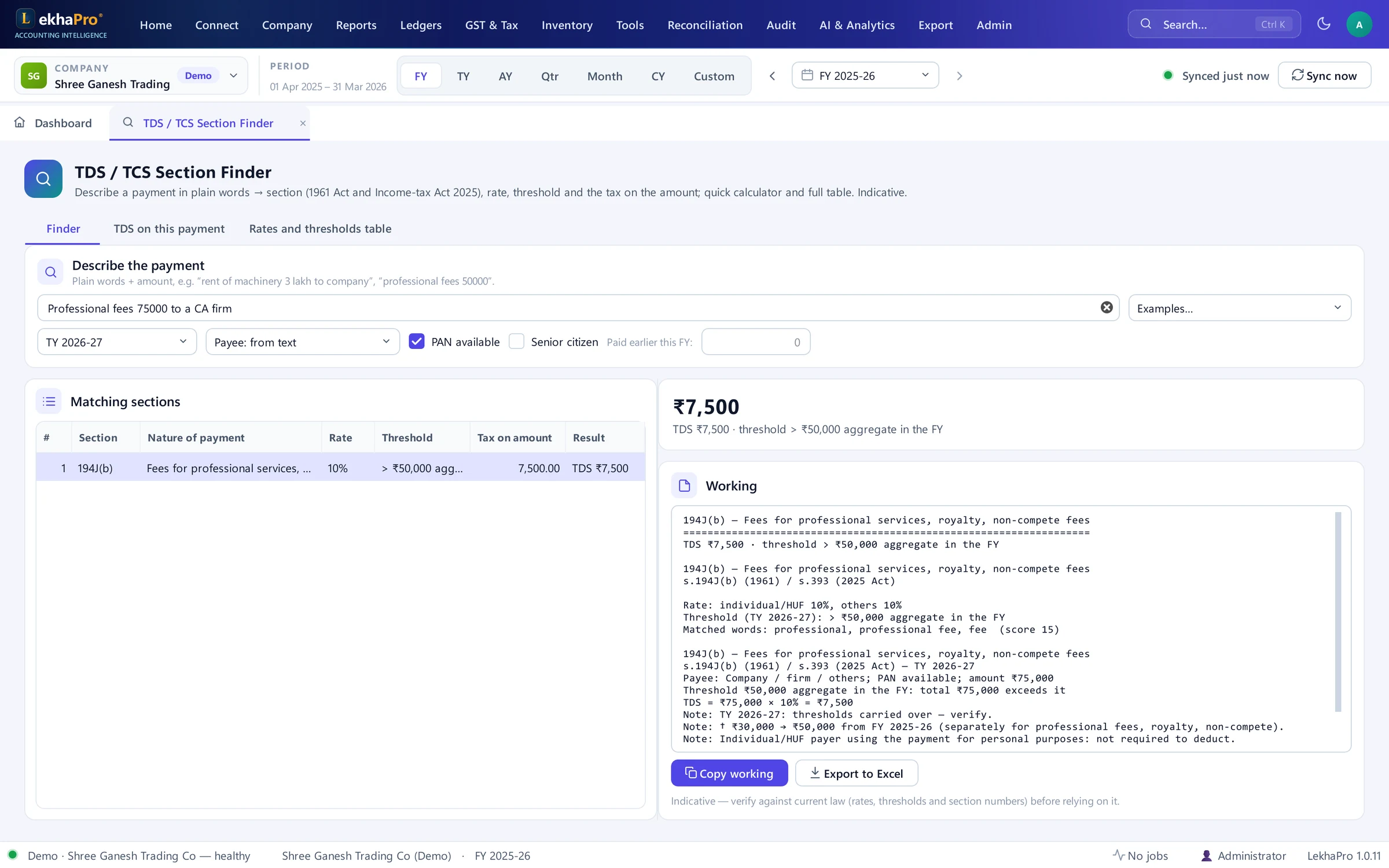
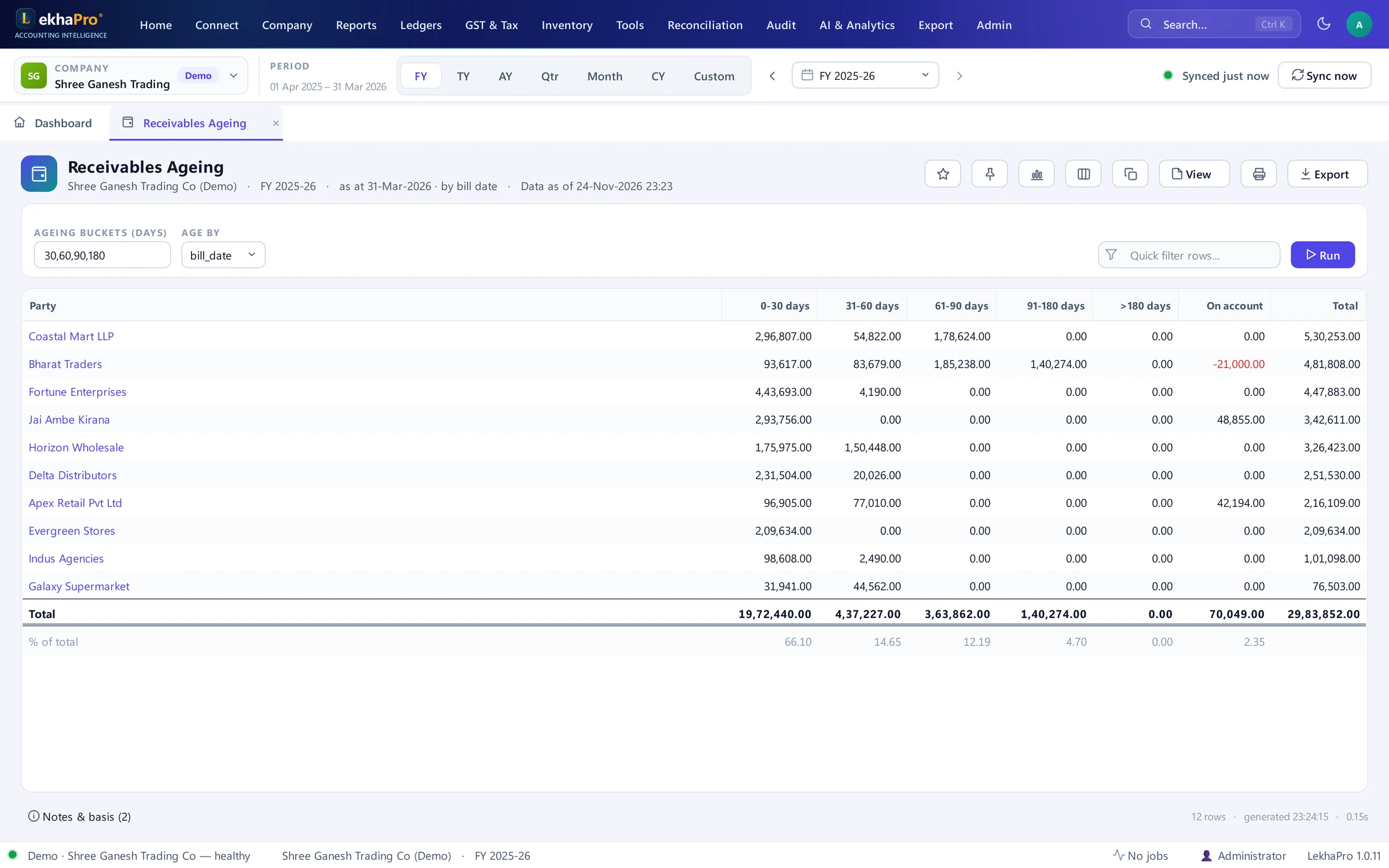
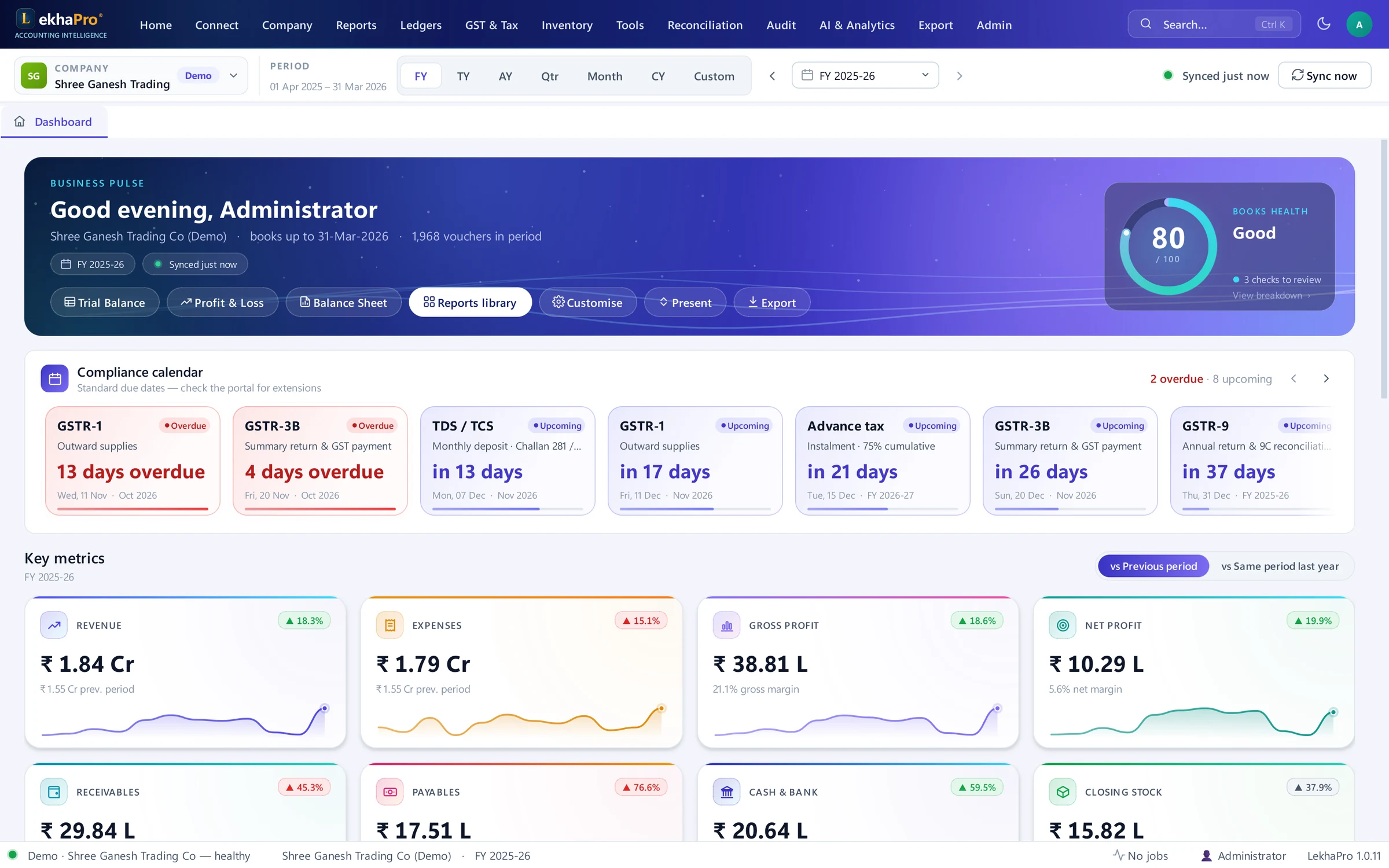
DashboardLekhaPro dashboard with business pulse, compliance calendar and key metrics
Questions
Schedule III, GSTR-2B, BUSY, MARG and audit
How do I prepare Schedule III statements from Tally?
Connect the Tally company, choose the year and open the Schedule III Balance Sheet or Profit and Loss. LekhaPro maps ledgers to Schedule III lines, adds previous-year figures, notes, ageing and ratios, and lets you change the mapping and layout. Export to PDF, Word or Excel after your review.
Statements follow Division I of Schedule III. Year-end entries are kept beside the books.
How does GSTR-2B reconciliation work?
Import the GSTR-2B file downloaded from the GST portal as JSON, Excel or ZIP. LekhaPro compares it with purchases in the books by GSTIN, invoice number, date and value. It lists matched, different, missing and duplicate invoices, finds numbers typed differently, and shows the ITC at risk.
It also works for GSTR-2A and for filed GSTR-1 against sales, with an IMS worksheet and supplier follow-up letters.
Can it read BUSY, MARG and EasySol as well as Tally?
Yes. LekhaPro reads TallyPrime and Tally.ERP 9, BUSY, MARG ERP and EasySol directly, without exporting first. Any other software can come in through Excel, CSV, ODS, XML or JSON files, or a two-year trial balance. All of them use the same report library, so your working method stays the same.
Tally can be read live or from its data folder with Tally closed. Product names belong to their owners and are used only to say what LekhaPro can read.
Does LekhaPro file GST returns by itself?
No. LekhaPro makes files from the books and checks them before export: GSTR-1 JSON and Offline Tool Excel, GSTR-3B JSON, e-invoice and e-way bill bulk files and more. You review each file, upload it to the portal and file the return there with your own login.
Can it read a Tally company locked with TallyVault?
Only with the client's help. A TallyVault company is encrypted, and LekhaPro does not guess or break its password. The client can open it in Tally and let LekhaPro read it live, or remove the vault in Tally. Either way, the password is typed only into Tally itself.
Which audit checks does LekhaPro run?
LekhaPro runs an Exception Library of 128 rules on the books, with limits that you can tune for each company. Checks cover cash limits under sections 40A(3) and 269ST, duplicates, back-dated entries and Benford analysis. Sampling, a CARO 2020 builder and an anomaly ranking are included. Results need your review.
What are the CA tools?
There are 21 CA tools and 4 document tools in the desktop app. They include a PDF toolkit and editor, interest, late-fee and capital gains calculators, 26AS and AIS matching, registers for notices, UDIN and DSC, and certificates and letters. The file-based tools work only on the files that you choose.
See it on your own client's books
Ask for a personalised demo for your practice or finance team.